Beginner Setup Guide
This guide sets out a recommended minimum starting toolkit for PAT testing, based directly on the equipment used and discussed during PAT testing training.
It is not a fixed or exhaustive list. As testers gain experience, their toolkits naturally develop depending on:
- The environments they work in
- The types of equipment they encounter
- The level of remedial work they are competent to carry out
What follows is a solid, sensible baseline to start from.
Core Test Equipment
PAT Tester
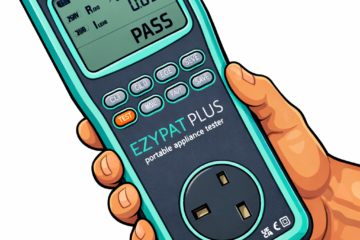
The PAT tester is the core item in your setup, but there is a clear practical middle ground that suits most people starting out.
Entry-level vs higher-end testers
Very basic testers that only return a pass/fail result are functional, but limiting. They tell you whether a result falls inside a threshold, not how close it is.
Second-tier testers that display numerical readings on screen are far more useful in practice because they allow you to apply judgement. For example:
- Taking cable length into account
- Understanding why a reading is higher or lower than expected
- Making informed decisions on borderline results
For most people, this type of tester offers the best balance between cost, capability, and practical decision-making.
Higher-end testers are typically designed for high-volume environments, where speed, automation, and data handling matter more than interpretation. Unless you are testing serious volumes, they are not a requirement when starting out.
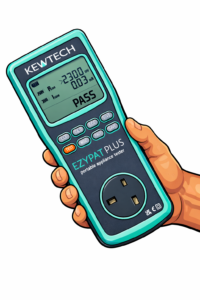
If you have not yet bought a tester before attending a PAT Testing Training Course, do not. Your intended work, environments, and testing volumes will be discussed on the course, and you will be given practical guidance on what type of tester suits your needs. This helps you avoid wasting money on equipment that is not appropriate for the work you plan to do.
Battery-powered vs mains-powered testers
For most people starting out, a battery-powered tester is the most practical option. It offers portability and flexibility and is well suited to office, retail, and light commercial environments.
A mains-powered tester may be beneficial where:
- Testing is primarily bench-based
- Large numbers of high-powered appliances are tested repeatedly
- 110 V equipment is common
Neither option is inherently better. Suitability depends on how and where you work.
Automation, barcode scanners, and printers
Barcode scanners, label printers, and integrated data systems are efficiency tools, not testing tools.
Unless you are regularly testing hundreds or thousands of appliances per week, you are unlikely to see a meaningful return from:
- Barcode-driven workflows
- Automated label printing
- Asset management platforms
For most beginners, these add cost and complexity without improving test quality.
IEC Leads and Adaptors
Not all equipment terminates in a standard 13 A plug. IEC leads and adaptors are used to connect appliances safely to the tester without modification.
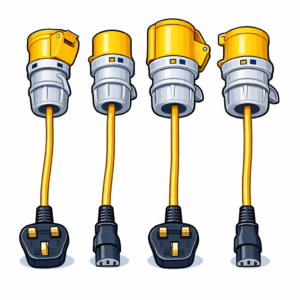
Common examples include:
- IEC C13 and C19 connectors
- 110 V equipment
- 16 A and 32 A CEEform connectors
These are a normal part of real-world PAT testing.
Test Leads: Probe vs Croc Clip
PAT testing cannot be carried out without a test lead. Depending on the tester, this may be supplied as:
- A probe-style lead
- A croc clip-style lead
- Or both
In practice, having access to both styles is preferable.
A probe is useful for quick checks and confined spaces.
A croc clip provides a secure, hands-free connection where stability matters.
The type of appliance and the physical location being tested often determines which is easier to use.
Hand Tools
Hand tools are required for visual inspection and minor corrective work identified during testing.
Screwdrivers
- PZ2 screwdriver: opening plug tops and appliance covers
- 3 mm flathead screwdriver: small terminals and electronics
- 4 mm flathead screwdriver: plug terminals and larger screws
- Long uninsulated screwdriver: accessing recessed terminals
The long uninsulated screwdriver can also be connected to a croc clip lead to act as a quick improvised probe where access is awkward.
Cable Tools
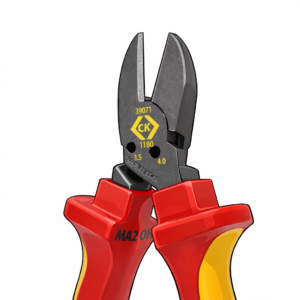
- Snips: cutting flexible cable cleanly
- Wire stripper: removing insulation without damaging conductors

Consumables and Spares
Keeping basic consumables allows common faults to be corrected during testing without unnecessary delays.
- Bootlace ferrules and crimps: secure conductor terminations
- Spare BS 1362 fuses: replacing incorrect or blown fuses
- Spare BS 1363 plugs: replacing damaged or non-compliant plugs
Supporting Equipment
These items support safe, practical working conditions.
- Torch or USB inspection light: inspecting equipment under desks or in low-light areas
- Kneeling mat or knee pads: prolonged low-level work
- PPE: gloves, eye protection, hearing protection as appropriate
- Tablet or notebook: digital record-keeping if not using paper forms
How Toolkits Develop Over Time
This list represents a recommended starting point, not a finished toolkit.
As testers gain experience, their equipment naturally expands to suit:
- Different environments such as offices, workshops, and construction sites
- Higher testing volumes
- Specialist or non-standard equipment
There is no single complete PAT testing toolkit. The tools evolve with the work.


0 Comments